Sunday, September 22, 2013

No time for Shopping: Alternate Retail on Rise in India


Alternate retail includes, online shopping, TV Shopping, direct selling
Trends in Alternate Retail:2013
Life is becoming busier in urban India. As per recent study an average urban Indian spends just six days in a year on shopping. At other times, it is alternate retail that swoops in to help. Alternate retail is already a $2.2 billion industry in India, thanks to increasing work pressure, need for work-life balance and challenges of transportation in big cities
While both direct selling and e-tailing are clocking in over a billion dollar in revenues annually in India, home shopping on TV has become a $200-million market, growing at a CAGR of 20 per cent in the last three years, according to the study by consultancy firm Technopak.
Over 50 per cent of those shopping through TV are from the metros while tier 2 and tier 3 cities bring in 60 per cent of the revenues for e-tailing industry.
Convenience and reach are primary driver for growth in alternate retail. Most active cities are Delhi-NCR, Mumbai, Hyderabad, Bangalore and then comes the tier 2 cities. For tier 2 & tier 3 cities its all about selection and then convenience
 Technopak says the trend towards alternate retail will continue to grow in the coming decade. “Brands and retailers will need to look at alternate retail channels as an integral driver of growth in the coming decade,”
Source: The Hindu & Technopak

Saturday, December 22, 2012

Top searched shopping sites in India

1.Flipkart.com
2.Homeshop18.com
3.Snapdeal.com
4. Bookmyshow.com
5. Myntra.com
6. Paytm.in
7. Olx.in
8.Jabong.com
9.Fashionandyou.com
10.Naaptol.com
Source:- Google Zeitgeist 2012

Tuesday, November 13, 2012

Shubh Deepawali Parv !! Less Sales Still its Time to Say Happy Diwali


Glittering  diye, colored candles, waving lights and lot of sweets. Whatever it takes, we are always enthusiastic about this big festival. Retailer were expecting big sale this year too but not that good year for retailers. Earlier people used to save money and at diwali they used to wait good offers and then they used to purchased. So on Diwali it used to be deferred demand and offers from big companies used to make big sale.

Now trend has changed, with round the year offers and gift vouchers from online retailers redeeming this deferred demand. Many of customers not waiting till Diwali.

Further global economic conditions forcing to save more for future. This year gold prices were at its peak despite of that on Dhanteras record 2.5 ton gold was sold across India  That clearly is an indicator people investing in gold for future security.

We want to spend on Diwali may be not on appliances or gadgets. Retailers not able to recognized that round the year offers and fear from global economic conditions changing scenario rapidly. Now they should plan their yearly sale with changing trends else low sale at Diwali will be hurting them.

Friday, October 26, 2012

Open a wider world: Micrsoft Windows 8 available in India


Microsoft Window 8 Launched in India in 2 versions-
  1.   Windows 8 &
  2.   Windows Pro

While Windows 8 enterprise offers mobile productivity with features like To Go, Direct Access. If you are using Windows XP, Vista or Window 7 you can upgrade to Wondows 8 by spending 1999 only.

The bundled version will be available on form factors ranging from tablets to laptops and ultra notebooks from 14 OEM (original equipment manufacturer) partners, including Acer, Dell, Fujitsu, HCL, Hewlett Packard, Lenovo, Samsung, Sony, Toshiba, Wipro and Zenith Computers.

It’s not yet available on any of e-commerce site though Over 250 Windows 8 enabled devices, including 23 new SKUs (stock keeping unit) of Windows 8 PCs are available across 100 cities and over 2,500 retail stores

-Nikhil

Thursday, October 18, 2012

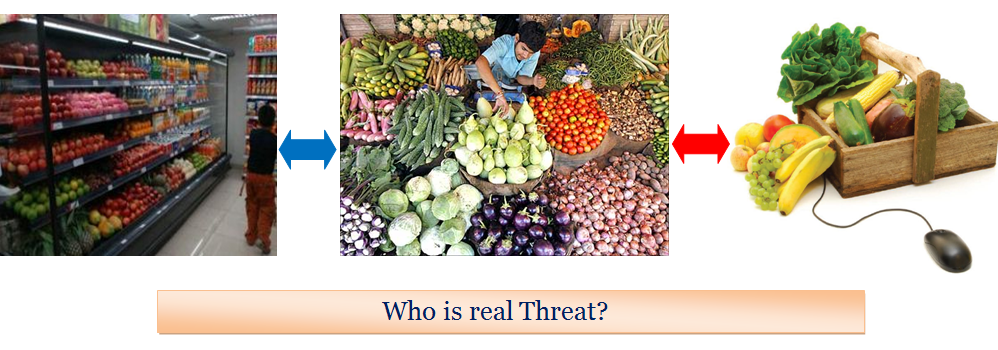
Who is a real threat to Indian small retailers: FDI in Retail or Online Retail

India ranks 5th in the Global Retail Development Index 2012 listings. Grocery holds the biggest share in retail sales with supermarkets and now cash and carry also grwoing, the apparel industry is set to grow at about 9 to 10 percent y-o-y over the next 5 years. Meanwhile, what has captured the Indian consumer’s mind share is a simple mouse click. Online outlets like Myntra.com, Flipkart.com and Tradus.com provide the cost benefits and value adds like free door delivery. Efficient procurement, warehousing, delivery and revenue collection systems are evolving to deliver quality value added services like Cash on Delivery and free delivery for orders above a certain value. The consumer gets to shop from any location, set the time for delivery and pay once the product is delivered. This innovative format has literally made a world of products available to the moneyed.

India has 8 per cent internet reach and its growing fast. Local Kirana store holder, chemist or mom & pop store holder need not to Wallmart, Tesco or may be Carrefour. They cannot eat their pie any which ways as there are clause behind FDI in Retail-


  •         Minimum amount to be brought in, as FDI, by the foreign investor, would be US $ 100 million.
  •         At least 50% of total FDI brought in shall be invested in 'backend infrastructure' within three  yars of the first tranche of FDI, where 'back-end infrastructure' will include capital expenditure on all
  •       At least 30% of the value of procurement of manufactured! Processed products purchased shall be sourced from Indian 'small industries
'
Such big scale investment will have more big stores with big buying efficiency to oofer good deals and offers. This will surely make all transaction taxable which in turn will raise government revenue in term of tax.
At the other hand there are already large format retailer present in India such as Chroma, Reliance or Fututre Group. None of mom & pop retailer feeling heat from them then how will Wal Mart be a threat to them.

What Indian consumer more focusing on is convenience. Big Bazaar pilot testing home delivery model in small part of Mumbai. If it gets successfully implemented then Mom and pop store will surely lose some sales.

At the other hand online retail is bringing silent magic. People in tier 2 and tier 3 cities are well aware of branded products but they do not have the reach. Internet surely fulfilling that gap. The new-age retailing models that are becoming successful in the country are online models with excellent offline enablement. These business models are incredibly innovative in terms of their procurement, inventory management, vendor base development and collections approach (primarily cash-on-delivery).

Few politicians making FDI their agenda for increasing their vote bank.  Ruling government coined FDI to de-focus Coal block scam. Ironically FDI in retail will surely help India and Indians to grow. This foreign money will make retail more organised, in turn more tax earning for government, more jobs, more demand and better cost for farmers seems like a win-win proposition.

Its not FDi that may be cause of concern for small retailers it online retail that innovatively eating their share from the pie. Its not policy, FDI or government that can save them. They need to innovate and bring challenges to the table for new age retail and new age retailers.

-Nikhil Kunwar


Wednesday, May 2, 2012

Indian Consumer More Vocal About Customer Care Services


In India, people shout more on customer care executive than any other part of the world. Indians want personalized and customized services. People in India like to know name of the executive and want to see whom they are seeking support. Consumer threatens to switch to the competitors to get extra benefits. Probably Jago Grahak Jago campaign has helped consumer in putting their say upfront.

American Express and global research firm 'echo' conducted a survey and below are the findings-

  • 64% of Indians lose their temper with a customer service executive Vs world’s other markets average of 48%
  • 61% insisted on speaking to a supervisor 
  • 12% of Indians use profanities or abusive language as against an average of 7% globally 
  •  Indians are becoming quite vocal about poor quality service too as each one tells approximately 47 people about their bad experience 
  • One out of every five consumers feels businesses pay less attention to providing good customer service 
  • four out of five believe that smaller businesses give more importance to customer service than large ones 
  • Most interesting finding - When customers know that a company is listening to them and addressing their needs quickly and responsively, they will not only spend more - they will spread the word to others as well

So, Indian consumers seems very honest. If they are satisfied they create buzz about that and if they get dis-satisfied then also they create lot of noise. Indian consumer wants little extra attention in term of after sales service. Wants more transparent system and tries to show they know how they can justice legally if they feel cheated.

-Nikhil


Thursday, January 19, 2012

100 per cent FDI in Single Brand Retail: What's in there for Retail n eRetail

For Retail

First n foremost expected positive outcome will be it will give huge boost in foreign investment. Few experts from industry believe single brand retailing can contribute half a percent of total FDI in next 5 years. Big Brands like Addidas, Nike, Louis Vuitton and Gucci   IKEAM&S and few other foreign retail giants seem to be among definite starters as they already have significant sourcing from in-country suppliers. Many more luxury brands are expected to sneak in with big plans. It may generate lot of investment and job opportunities. Despite of all positive sentiments many believes there are certain regulations that will never allow to achive such big results that are expected. One clause says that these big giants have to procure 30% of their raw material from Indian SMEs.
Decision taken in interest of Indian SMEs and small entrepreneurs but are Indian SMEs are fully ready for the same is gonna be big ask? Or these big giants will prefer this step also a consideration.

For eRetail

In 2011 alone, investors poured $350 million (Rs 1750 Cr apprx.)  into 57 internet startups - that's more than the collective dotcom investment of the past four years, according to VCCEdge, an Indian online deal platform. Some $3 billion worth of e-commerce was transacted in 2011, says IAMAI. And, according to Helion Venture Partners, $20 billion worth of e-commerce will be done in five to seven years, with 12-15% of shopping going online in this period. Till date, however, the Indian Railways website for booking tickets is easily the most successful e-commerce model. Launched in 2002, irctc.co.in sold just 27 tickets online on its first day. Today, it sells 4 lakh. According to Verisign, an internet registry, about 2.6 million dotcom and 'dotin' companies are registered out of India. Along with this Indian internet users no is going to 30 Million by 2015. Certainly with 30% year on year growth rate eRetail seems to be most promising. If retailers get investment and out of that 10-15% get diverted to online retail, surely there will be boost in growth.

All in all it’s a big positive step for retail. There are certain clause to be amended smartly.  It also indicate that soon multi-brand retail will get 100% FDI as well. Which surly will open doors for even bigger success in Indian retail and agrarian practitioners.


-Nikhil Kunwar

Monday, July 4, 2011

Internet Retail Seems to be Most Promising Industry in India


Indian online industry will be more than its double fold from its current stand. The market size of online retail industry in India is likely to touch Rs 7,000 crore by 2015 with the increasing internet reach across India, a survey said. Currently, the online retail market stands at Rs 2,000 crore and is growing at an annual rate of 35%, industry chamber Assocham said.

India is set to become the third largest nation of internet users in the next two years. Metros are leading the way to make it India front runner across globe. Among big cities, consumers in Mumbai topped the chart in online shopping followed by Ahmedabad and Delhi. 

Booming economy, higher disposable income & changing life-style where coming generation are falling in the early adopter category for accepting new technology, making favorable environment for eRetail in India.
Young shoppers need option to buy any time with a feature where they can compare features & prices. Online retail is a perfect medium for such customers.
No waiting, no fuel expanses and time saving are the main reasons that makes Mumbaikars top online shoppers. In Metros internet penetration is good and people have less time and more disposable income, so metros are leading the way.
Facilities like free shipping, product ratings/ reviews, multiple payment options, product demonstration videos and free return policy largely influence the purchasing decision of consumers shopping online.

Nikhil Kunwar

Sunday, June 19, 2011

Hoping Good Response in Emerging Categories of e-retail- FMCG

Now buy FMCG products online
Online Retail in India moving towards High Risk High potential categories like FMCG. Though Categories like Apparel & electronics struggling for survival but still companies like Dabur, Himalaya Herbal Healthcare, Neutrogena, Oriflame, Amul, Future Group, Aditya Birla Retail, REI Agro and Carrefour, have a strong belief they will be able to expand their reach through the internet.  Dabur already have started selling personal care products from their online site- http://www.uveda.retailmart.com

"FMCG companies and retailers have started using the online medium not only for brand promotion but also for sales. It is a difficult category to break into in terms of online sales, but many players are making aggressive efforts to do so," Wirefoot India Technology (an online retail consultancy firm) MD and CEO Ankur Dinesh Garg shared his view in his recent interview.

FutureBazaar.com is selling personal care & child care products online. "We are experimenting at the moment with a limited number of FMCGs. The category offers a good opportunity in terms of consumer’s frequency and repeat orders online," FutureBazaar.Com President Kashyap Deorah said in an interview.

In India internet industry contributes 3.2% to GDP which is almost equal to world’s average, but if you look at fraction to online retail out of it, it lowest in the world. In such scenario categories like electronics and apparel not able to give the sustainable boost to business, I will be big challenge to make their way categories like FMCG.

At the same time the way online retail is growing in India, it will definitely give some positive result 2 years down line. Big companies investing big to develop online channel to reach their consumers and it’s been a right time to do so. Once FDI will be open in multi brand retail this channel would become more lucrative and sustainable.


Nikhil Kunwar


Sunday, June 5, 2011

Internet Industry Contributes 3.2% to GDP


With the evolution of ICT worldwide, the Internet becoming a strong and far reaching platform for every business. Slowly and gradually Internet becoming a substantial contributor to GDP across globe. India too witnessing good growth in internet industry. Below graph shows how internet industry is contributing to GDP in fast growing & developed nations-
Per cent contribution to GDP by Internet Industry

- The Internet has 3.4 % share of total GDP of the 13 countries that were studied. The share of the Internet in India with respect to its GDP is 3.2%, fairly close to the global average but still lower than it.
- Private consumption online is driven by purchase of goods and services by consumers through the Internet. India and China have the lowest Private consumption among the 13 countries.
- Trade Balance is the (total export of goods, services and internet equipment along with B2C and B2B e-commerce) minus (internet related imports). The impact of the internet in India was powered by strong exports and contributed 47% to the Internet’s share in India’s GDP. 
- The spending by the government is the Public expenditure in the chart and you will see that the government spending accounts for only 5% of the Internet generated GDP

Though private consumption is very less in India which means still Indians are not shopping and transacting much online but still strong in internet industry against other countries. India has managed to achieve a growth rate previously unseen anywhere in the world and get almost 200 new Internet industry related patents every year.
The challenge for us now, is to capitalize on the human resources available with us and of course, Investment in infrastructure development is a must for to fully realize our growth potential.

Nikhil Kunwar